It’s been sixteen years since Clay and Elena became parents in the sixth installment of Kelly Armstrong’s Women of the Otherworld. Now Kate and Logan are all grown up, teen supernaturals in a community that is working hard on diversity and inclusion. So when Elena sets her children up to attend a teen leadership camp for supernaturals of all races, the twins think that it might be a good way to show other kids their age that they aren’t the big bad wolves.
But from the moment they arrive, things are not what they expect. From angsty roommates to fake boyfriends, this is looking like a tough weekend for the twin werewolves. But it isn’t long before the camp takes an even more sinister turn, and suddenly Kate and Logan are fighting for more than just acceptance, they’re fighting for their survival.
Don’t you just love it when authors put out sequel series to books you love? I thought I’d read just about everything in Kelley Armstrong’s Otherworld series, so imagine my joy and surprise when I found out she’d written a duology about Clay and Elena’s children, sure to be packed full of familiar, beloved characters and chock full of surprising references.
I was not dissapointed.
Kelley Armstrong isn’t the number one best writer in the world, but she is one of my favorites for a number of reasons, and all of these reasons were present here: she’s a wonderful storyteller, and these books are full of the big build-ups and surprise endings of all the previous Otherworld books. Though not as sexy as her adult books, I feel that these books have just enough romance, and an exploration of gender and sexuality that is wonderfully modern, particularly after reading Women of the Otherworld in the past six months (the first of those books was written before everyone had a cell phone, so they can occasionally come across a little dated). But there are gay characters, bi characters, a trans character, and even a character that was on the asexual spectrum that I really connected with personally. None of them are caricatures, and I feel like this is a cast that isn’t only diverse in their supernatural races, but it’s not overly whitewashed or heterosexual, and this diversity is where YA is going and I was glad to see that Kelley was keeping up.
Something that I did NOT expect, but was stoked to see, were characters that showed up from Armstrong’s Darkest Powers series, which is YA and Otherworld adjacent, and I had pretty much completely forgotten about, having only read once years ago. Having some of those characters show up just made me desperately ready for a re-read of those books, so I’m very excited about that.
My one criticism is that while the diversity of this cast was on point, you can tell it’s been a while since Kelley was a teenager, and some of the dialogue felt a little like something that a middle-aged woman thinks that teenagers sound like, but they don’t really. This is coming from someone who, granted, hasn’t been a teenager in a while either, but I think as people age, they forget that most teenagers don’t necessarily have a stylized way of speaking. But though a few lines made me cringe a bit, it was such a little thing that I couldn’t manage to knock off even a half-star. Because I’m pretty much a sucker for anything Armstrong writes, so they’re all going to be five stars from me.
If you’re a fan of the Otherworld series, I certainly recommend picking up these books. They’re terrifically short and delightfully readable, with an ending you won’t see coming. If you’ve never read Women of the Otherworld (which has 13 books and a few novellas), you can certainly start with these two for a more bite-sized taste and you won’t feel lost. I do recommend reading them chronologically, but I’m not here to tell you what to do.
If you liked Wolf’s Bane and Wolf’s Curse, try:
Bitten by Kelley Armstrong (Women of the Otherworld Book 1)
The Summoning by Kelley Armstrong (Darkest Powers Book 1)
Marked by P.C. and Kristin Cast (House of Night Book 1)
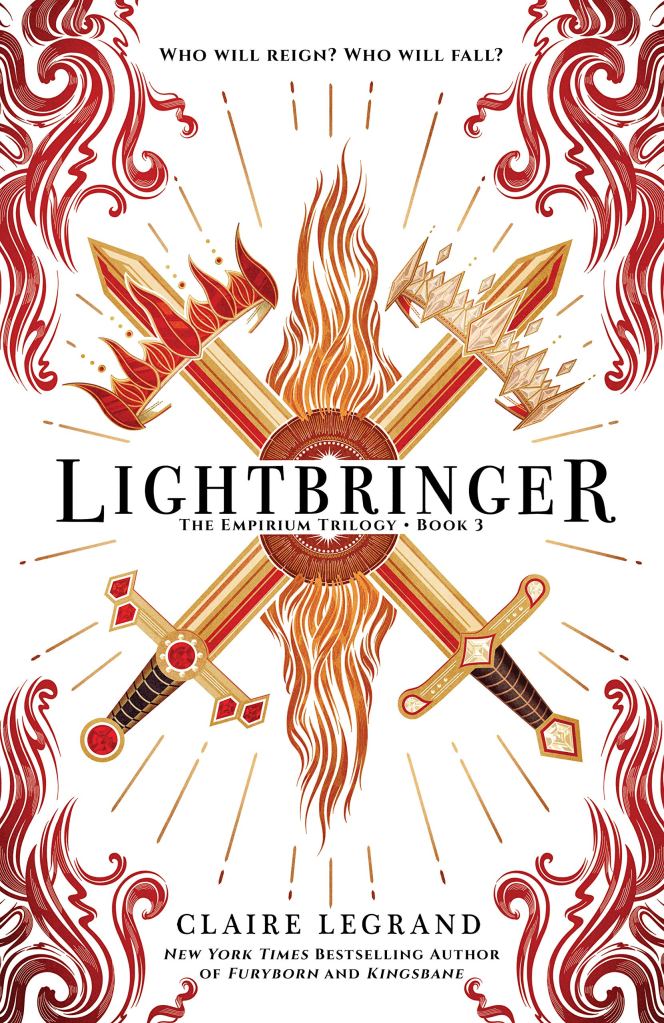
This is the final book in the series, so I don’t feel the need to post a summary, but I just wanted to do a brief review. This review will, however, contain some spoilers. Most of it will be spoiler-free, but I’ve got some opinions and I would really like to share them. I’ll be sure and mark the section with spoilers in big print.
Review
If you’ve read the previous two books in this trilogy, you expect an epic conclusion, and Legrand does not disappoint. This is a very large cast story, especially since it transcends two different timelines, and in this final installment I believe you get more perspectives than ever before. This bob-and-weave between two different timelines and multiple perspectives (though it does stay in third person throughout) might be confusing and overwhelming in most situations, but Legrand masterfully blends this story together to make it cohesive and comprehensible throughout.
However, this is the second sequel in a row where the author, in my opinion, breaks the unspoken rule where the writer must give little hints of the major plot points from the previous book within the first 50-100 pages as a little refresher. Fifty pages in I nearly put the book down and thought about doing a re-read, but that’s close to 1200 combined pages in the previous two books, so I decided to forge on through. I’ll definitely do a re-read of all three books someday though, so I can get the full picture, because I’m sure there are some things I missed due to waiting at least a year between each book.
I would also like to say that this is probably the heaviest of all three of the books. In all but perhaps the last one hundred pages, all four of our “heroes”, Rielle, Audric, Simon, and Eliana, are utterly tormented and trapped within their own hells. So if you’re looking for something lighthearted, Lightbringer might be one to save for later.
However, Legrand offers a masterclass in worldbuilding, engaging though sometimes slow-moving plot lines, and the most morally ambiguous cast of characters you’ll find anywhere (except for Audric, who is a cinnamon bun).
!!!START OF SPOILERS!!!!
Here are the two main problems I had with this book, besides being mildly depressed through nearly all of it:
I’m not really sure that Rielle deserved the redemption that she got. This book showed her getting real twisted and bad, and for the first time I saw her as nearly as much of a villian as Corien and didn’t have much pity for her at all throughout. I think while it was important that she got to the point where she would have killed Audric had Eliana not stopped her, I think she should have had to work a little harder to earn Audric’s trust back. I think he forgave her for everything a little too easily. It’s okay to love someone through their mistakes, but I feel she should have had to work harder to earn back the little bit of peace she got from their relationship in the end.
I feel like all of those characters in the future timeline that were developed through all three of these books got the short stick. I know the whole point was to defeat Corien in the past to prevent the timeline they live in, but Navi, Remy, Patrik and Hob, and even Jessamyn, all just wiped from existence. I would have appreciated a little epilogue of “1000 years later” or something that went over that these characters were still born, but not under the same circumstances…because just wiping them all out seemed cruel and lame.
!!!END SPOILERS!!!
Overall I think that this book was a well-written, generally satisfying ending to a wonderful series that I would certainly recommend to everyone who loves fantasy. And considering the last book that I read with time travel (see last week’s summary of Greythorne), I think this series did a much better job of making things with time travel messy and imperfect, just the way it should be.
If you’re a fan of the Empirium Trilogy, try:
Children of Blood and Bone by Tomi Adeyemi (for epic worldbuilding)
The Cruel Prince by Holly Black (for morally ambiguous protagonists)
The Reader by Traci Chee (for not-your-traditional happy ending)
Time it took me to read: 3 days of reading over 15 days (during NaNoWriMo)
Rating: 4 out of 5
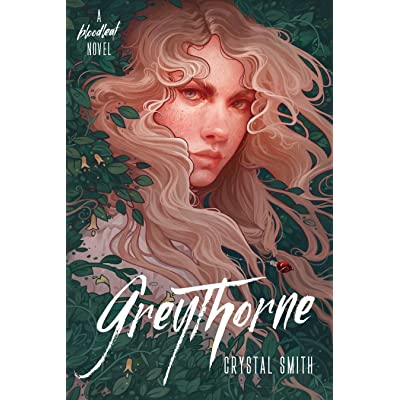
Review: There is a lot that I liked about Greythorne. The characters are easy to root for, the pacing is pretty good, and I would say that it is decidedly unpredictable. However, I had to take a star away because though I thoroughly enjoyed this novel, I had a pretty large gripe, and it’s the same gripe that I had with the first installation: the world-building is half-baked and the plot is rather confusing.
Listen, the world that I see, that I understand, I’m into it. The brand of magic is far from generic, and I think that keeping the scale small (a tale of two kingdoms) is smart, but I don’t really understand most of the rules of the magic or the world that’s been built. I’m not fully sure that Smith knows all of her own rules, which is pretty important for a writer.
As an avid reader and aspiring writer of YA fantasy, I like to look back on a book once I’ve finished it and understand how I got to the ending. While there were little clues left behind, they were so strange and out of place when you first read them, I was just confused, rather than intrigued, which I think was the idea. However, I also know world-building is crazy hard, having tried it myself. I very much respect her effort and look forward to the third book in the series coming August 2021.
Summary (SPOILERS AHEAD):
Aurelia – young princess of Renalt, older sister of Conrad. She is a blood witch, meaning she is able to use magic that involves drawing her blood or using someone elses. Renalt persecutes witches, so they must live in hiding. If they’re captured, they’re killed. Aurelia is the only blood witch who doesn’t hide her powers.
Conrad – eight year old king of Renalt, coronated in the early part of this book because his mother died in the previous installment. Likes puzzle toys and is wise beyond his years
Zan (Valentin) – rightful king of the collapsed kingdom of Achleva, Aurelia’s love interest. “Died” near the end of the first book, Aurelia saved him using her own life force, so they are bound together. In the beginning of Greythorne, thought by Aurelia to be dead (really dead).
Kellen Greythorne – bodyguard of Aurelia, his life is bound to hers with a blood oath. If she is about to die, he dies in her place. His was one of three lives protecting Aurelia’s: her mother the queen (who dies in the first book), Simon (blood mage mentor), and Kellen’s. He is in love with Aurelia, she does not love him the same way.
Onal – herb woman of Renalt, close advisor to royal family. Secret grandmother of Aurelia, when her adopted grandmother the former queen could not conceive children. Grumpy, but brave and intelligent.
Rosetta – new character in this book, the feral magic witch of the Ebonwilde. Immortal, called the Warden because she is the keeper of the balance of the world and cannot die until she is replaced by another descendant of the Ilithiya.
Dominic Castillion – self-proclaimed king of Achleva, supposed murderer of Zan. When Achleva collapsed and Zan went missing, Castillion took advantage and spends this book working on completely taking control of the country.
Lorelai, Rafaella, Delphinia, and Jessamine – the “Canary Girls”, saloon girls of the Quiet Canary inn. Friends of Aurelia, they protect her and her brother from the authorities.
Act 1
Aurelia thinks Zan is dead, and wants to get on the luxury boat of Dominic Castillion to kill him in revenge for Zan. Conrad is due to be crowned, and Aurelia is trying to stay out of it, knowing she’s a danger to her brother’s rule as a known blood witch. The Tribunal (judicial authority of Renalt) is after her. Simon, from his hiding place, sends her a mysterious book that she only partially deciphers.
On the day of her brother’s coronation, a woman named Isobel Arceneaux, a magistrate for the Tribunal, arrives and tries to use her brother’s coronation as an excuse to try her and kill her on the spot. She drags Zan forward, proving he’s alive. In desperation to save her own life and Zan’s, Aurelia kills one of Isobel’s men and uses that blood to transpot her and Zan to safety at the Quiet Canary.
Zan has been working secretly for the past year that Aurelia thought he was dead to help refugees and work to take his country back. He was captured by Isobel coming into Renalt.
At the Quiet Canary, despite being mad at him for not telling her he wasn’t dead, Aurelia gets a little drunk on sombersweet wine and decides to seduce Zan.
However, doing so kills her. Well, it kills Simon, who was her second protector after her mother. Simon tells her that when she touches Zan, it kills her because his lifeforce recognizes hers as his own, so when he touches her it literally sucks her lifeforce out. Simon tells her that there is a prophecy: if Zan dies, the Malefica (evil entitity) will be released upon the world, but if she dies, the Malefica will be trapped forever. But she can’t die, because before she can die Kellen has to die (due to the bloodcloth ritual). Simon tells her to go to the feral witch of the Ebonwilde for help to break the bond between Kellen and herself. Simon dies.
Aurelia awakens and runs away without telling Zan what happened (dumb), then goes back to Greythorne (where her brother is ruling from), and grabs Kellen and Onal to find the witch of the Ebonwilde.
Act 2
Aurelia, Onal, and Kellen find the witch, her name is Rosetta and Onal is her sister. Onal is like 120 years old, and Rosetta is just as old, but looks sixteen because she is the Warden, meaning she is the protector of all things in the world (descendant of the Emperya (goddess) ). Rosetta recognizes the book Simon gave her and tells her it belonged to her older sister, the previous Warden.
Rosetta teaches Aurelia how to travel using the Gray, a realm that is inbetween times. The first time she goes, she is looking for the Ilithiya’s Bell, which is a powerful magical artifact Aurelia thinks is needed to break the bond between her and Kellen.
The merry band (Aurelia, Onal, Rosetta, and Kellen) travel to Achleva, because they think that’s where they’ll find the bell. Instead they find Zan, who has resumed his duties in trying to save his kingdom. Aurelia goes into the Grey again and gets the story of how Rosetta and Onal’s older sister, the previous Warden dies. What happened was that soldiers came and murdered Rosetta. Galantha (oldest sister), is unable to accept it and uses her magic and the Gray to try and save her sister. Through a complicated series of events, it works, but Mathuin Greythorne, her love, got sent away to an unknown place (or time), and Galantha “died” to save Rosetta and make her the Warden, though she trapped the wrong spirit in the wrong body (as I understand it), which makes Rosetta immortal.
Also we learn that Isobel Arceneaux is the sister of Aurelia’s father, the dead king, though she was a girl so she was left to die as an infant, so she doesn’t know her background. Aurelia learns that Onal is her grandmother.
Act 3
Zan, Kellen, and Rosetta are captured by the Tribunal, Onal and Aurelia narrowly escape. In order to get back to Renalt where Aurelia is convinced she’ll find the Bell she needs, she gives herself up as a hostage to Dominic Castillion, the pretend king of Achleva. She tricks him at his own game and leaves him on his ship to die as it burns. In this escape, Onal is wounded and Aurelia must use her blood to get them out of the situation alive. This causes Onal to die.
Aurelia makes it back to Renalt to find the Tribunal has completely taken over, her brother is safe and in hiding at the Quiet Canary with Aurelia’s friends and the local children.
Upon going back to Greythorne, Aurelia finds a member of the Tribunal, Lyall, has been doing experiments where he traps souls of deceased Tribunal members in the bodies of other deceased people. Basically they slaughtered the whole village, including the refugees, to make them creepy zombies with the souls of Tribunal people. Aurelia takes them all out and goes back to rescue Kellen, Rosetta, and Zan from Isobel, who is convinced that the Empyrea (really the Malefica) will take over her body if she can kill Zan on the red moon day.
Everyone, including Kellen’s brother, the lord of Greythorne, is dead from this ghoulish experiment. Rosetta admits that there isn’t any real way that the Bell can break the bond, she was lying because she was trying to find the bell because she just wants to be able to die.
Aurelia realizes that Kellen doesn’t need to die to break the bond, she just needs to take away from him something just as valuable, for Kellen that is his purpose as a guard. So she takes her dagger and cuts off his right hand, his sword hand. He is understandably pissed, totally ungrateful that she saved his life.
Aurelia confronts Isobel, who is going to kill Zan. During the chase, Aurelia finds the Bell and rings it.
This is where shit gets the WEIRDEST (sorry, I try to be pretty objective in these summaries). Aurelia figures out that all her problems can be solved with time travel, and in fact have already been solved with her time travel. She splits her souls (or something) and puts the perfect, unblemished one to sleep somewhere safe. Then she takes her body that is fated to die and does all of the time travel tasks required to make everything work out. She saves Zan’s life where she thought he died in the beginning (convenient), she gives her little brother all the tools he’ll need to set everything in place, including a vial of her blood which will be needed to reawaken her other self. He is the only one she tells the whole plan to, so that’s why he is so calm and not worried the whole book. She goes back so far to a long dead king of Renalt and forces him to make peace with Achleva by saying the next daughter of Renalt would marry a son of Achleva (which is what got them all into this situation in the first place).
And at the very end she goes back to where Isobel has been completely taken over by the Malefica and rings the Bell so that Isobel/Malefica is the immortal Warden of the world, taking the mantel from Rosetta.
To make sure the Malefica is trapped forever in the Grey, Aurelia must die. So she goes to where Zan is and kisses him to kill herself, but tells him that it isn’t forever, that he just needs to find her.
Epilogue
They bury Aurelia, everyone is upset except for Conrad, who knows better. After the funeral, he gives Zan Aurelia’s blood and the instructions. It takes them a year, but I guess they find her other body in the glass coffin.
The end
Final Thoughts: This isn’t the most elegant summary, I’m going to try and do these right after I finish reading the book, not like a week later, in the future. To anyone who’s read Greythorne, I hope this is helpful in preparing for Ebonwilde, the final installment in the Bloodleaf series, due August 2021.
Thanks to anyone who still follows this blog. I make a goal every year to be more consistent about posting, and I’m hoping 2021 will be the year I can actually stick to it.
I’ve decided that book review blogs are pretty common, and I had a thought of something that I’ve never seen before but that I’ve always wished was available.
Instead of book reviews, book summaries.
Have you ever read a book, and then a year later the sequel comes out, and you find yourself reading the first few pages not remembering anything that happened in the last book? Or even having to go back and re-read the first book so you can get everything possible from the second one?
As much as I love re-reading books, I only get to 50-55 books a year, and I don’t have time to re-read the first book to every sequel that comes out.
I’m going to be writing a short, one paragraph review of the book, then write a summary of the book as a whole, which will include important plot points and a character list, along with a brief review of how the books end. Then when it’s time for the sequel, all I’ve got to do to refresh my memory is read the summary. Then I’m all ready for the next adventure.
For standalone novels or final books in a series, I’ll likely just post a review that is mostly spoilers.
This is something that might not be of use or interest to anyone but me, but I’m going to try them out.
Look out for Sarah’s Summaries, starting January 2021.
Elena Michaels is a normal woman. She has a career she enjoys, a boyfriend that dotes on her, and gets plenty of exercise. Well, most of that exercise happens on four legs, rather than two, and that is exactly what makes Elena NOT normal: once every week or so, she has to sneak out of her apartment in the middle of the night to transform into a werewolf. It’s not a big deal, she’s put that part of her life behind her, it’s really only a minor inconvenience. Except for when her former Pack’s alpha calls her for help in a way she can’t refuse.
Soon Elena is once again wrapped up in the life she’s tried so hard to forget, the world of tracking down rogue werewolves and helping to ensure that the secret of her Pack stays that way. And as always she finds herself again entangled with Clayton, the man who’s heart she’s broken a hundred times but who can’t seem to let her go, despite the fact that they have a past which she can never forgive.
But Elena is never one to back down from a fight, and when the Pack is threatened, she’s left to defend it with everything she has.
*This sequel description contains SPOILERS*
Elena Michaels is a werewolf. She’s finally accepted it and found her place at Stonehaven, the home of the Pack, with her alpha and her partner, Clay. Just as she’s started to fall into her old routines of keeping the Pack safe from exposure, she stumbles upon a new secret she never suspected: werewolves aren’t the only thing out there that goes “bump” in the night.
Elena and her Pack are just one “race” of supernatural being out there: witches, sorcerers, half-demons, vampires, they all exist for better or worse. And lately, members of each race have been disappearing. Against her will, Elena is drawn into the mystery of where these supernaturals have been disappearing to – and who’s been stealing them.
I’m going to try and keep these reviews for books I’m re-reading pretty short. This series has 13 books in it (yup), so I’m not sure I’ll review them all, and many of them I’ll probably try to review in pairs (as these are the first two books in the series and share the same protagonist.
“Women of the Otherworld” is definitely one of my top three favorite series EVER in the adult fiction genre. Typically, I have struggled with adult fiction for a few reasons: too much unnecessary sex, not enough plot, poorly developed characters, and lack of quality writing.
I have absolutely nothing against the romance genre, there’s a reason it’s the most lucrative genre in publishing, but those types of books aren’t really for me. And though there definitely is a difference between romance and adult fantasy fiction, I’ve found that the “fantasy” aspect is really the only major difference in most of my experience. I’m not opposed to a few steamy sex scenes, but I need plot and character to be driving the book, not just jumping from sex scene to sex scene.
“Women of the Otherworld” books are filled with complex characters, fast-paced plots, and yes, a few steamy sex scenes to keep things interesting. Pretty much everything you could want in adult fiction, in my opinion. Those are just a few of the reasons I find myself coming back to read the series in its entirety every two to four years. And now it’s especially fun, since I’ve roped a few of my dearest friends into reading the series along with me, so we trade the books back and forth and get to talk about them, which is especially fun, as it’s the first time reading most of them for my friends.
Specifically regarding Bitten and Stolen, you really couldn’t ask for a better introduction into this incredibly engaging and diverse urban fantasy world that Armstrong has created. Elena engages you on her journey from the very first page, her struggle against who she is and her desperate attempts to create a life for herself like she always imagined resonate through the pages. Even though I’ve never been a werewolf, I understand how upsetting it can be when your life isn’t going the way you planned, and it seems to just keep spiraling further and further from your control. Plus she’s a strong, smart, independent woman, and who doesn’t love that in a protagonist.
As for re-reads in general, there is something so comforting about returning to old favorites, being able to read through them at the speed of light, but also having forgotten enough about what happens that the action is still exciting.
I’m throwing in some new books in-between “The Women of the Otherworld”, so I’ll be bringing some fresh reviews to the site that aren’t re-reads. If you’re interested in what else I’m reading, since not everything will make it onto this blog, check out my Goodreads, you can add me at “Sarah Kruhlak”. I’m making my way through my “Book a Week” challenge this year, and I’m actually a few books ahead (one of the few good things to come out of quarantine).
If you liked Bitten and Stolen, try:
Moon Called (Mercy Thompson Book #1) by Patricia Briggs
Glass Houses (Morganville Vampires Book #1) by Rachel Caine
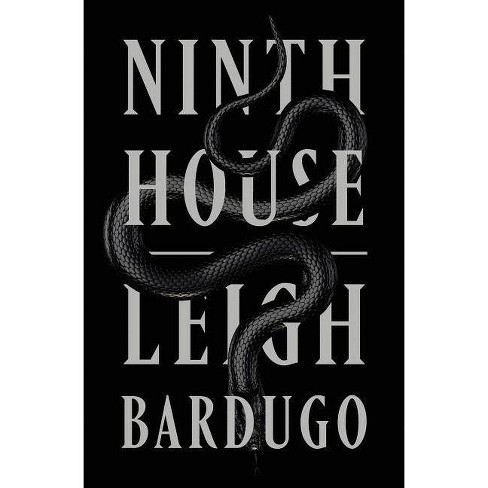
Alex Stern never thought she’d be part of Yale University’s newest freshman class. She doesn’t speak three languages and she’s not set up to be the next great American novelist. She doesn’t even come from money. But what she does have is a unique kind of power that makes her desirable to Yale’s Lethe House, one of the nine highly secret and darkly alluring societies that have existed at Yale for hundreds of years. The job of Lethe House and its initiates? Keep the other eight houses, the Ancient Eight, in check, for each one specializes in a type of magic that has the ability to make or break careers or bring countries to their knees, but without Lethe members monitoring and protecting these rituals, things can get messy fast.
Despite her natural ability to see “greys”, the shadows of those who have crossed the Veil in death, Alex quickly finds herself in too deep when a girl is murdered on the university’s campus, a girl with connections to more than one of the Ancient Eight. And even though Alex hasn’t been at Yale long, she’s learned fast that there’s no such thing as coincidences when the societies are involved.
I’ll start out by saying that this book was not what I expected at all. I’m a huge fan of Leigh Bardugo, I think she’s one of the best writers in YA currently, her Grishaverse books grab you from the very first page. So I was very intrigued when I learned she’d branched out a bit into the adult fiction sector with what, to me, was marketed as a mystery novel set at Yale University’s campus.
As someone who tries to dip her toes outside of her comfort zone every now and again, I thought this would be a great opportunity to do so. However, it was pretty immediately apparent that this was not so much a realistic fiction mystery, but a story about dak rituals, ghosts, and magical substances that can put a person completely under the influence of the wielder. So, really, not so far off from the kind of stuff I read regularly.
I’ll start off by saying that to me, the distinction between “adult” and “young adult” is getting blurrier and blurrier these days. Really, the only thing that makes this “adult” rather than YA is the age of the characters. One might argue that there are significantly disturbing scenes, including sexual assault and heavy drug usage, that make it fitter for an adult audience, but we all know that sexual assault and drugs certainly aren’t limited to adults. These days, one can find books in the YA sphere that deal with violence, death, assault, drugs, sex, and yes, even use an unlimited amount of foul language. Because none of that is over the head of the sixteen to eighteen year olds these books are “marketed” toward. Plus, I feel as though publishers would be remiss if they failed to notice that a huge percentage of YA readers, such as myself, are well into their twenties and thirties and enjoy mature, socially relevant themes. End tangent.
Anyway, I have to admit I was expecting to be quickly pulled in head first as I usually am with a Leigh Bardugo novel, but that was not the case here. I will say, despite the fact that I gave this book the five-star rating I believe it deserves, that the story starts out slow. I found myself very bogged down with trying to remember all the names and the nicknames of the characters, as well as all of the different societies and what they specialized in. I recognized right away that everything that Leigh lays out for the reader is incredibly well researched and beautifully written, however, the story takes quite some time to pick up. Close to 200 pages in fact. Which is enough to deter many less serious, and some even more serious readers like me. Quite honestly, I’m not sure I would have made it through this book were it not for my unwavering faith in Leigh Bardugo.
Maybe that should deter me from giving this book five stars. But I don’t care, it’s my rating system and I can do what I please.
The last two hundred pages of this book were thrilling and exhilarating enough to keep me flipping the pages as quickly as I could. By that time, the reader is well acquainted with the different houses of the “Ancient Eight”, and what they do, and they begin to have more and more faith in Alex, even though by this point you’ve learned about her “storied” past and why she might not, in fact, be the kind of person you should put your faith in. But that is why I only got to liking her more and more as this book progressed.
To talk about character a bit, Alex Stern starts out as a farce of a standard YA protagonist. She can see ghosts, she had a rough childhood because they wouldn’t leave her alone, yadda yadda, seems very much like many other characters I’ve read before. But there was something about her that kept me from getting too attached to her from the start. And I think it’s because she’s really not “likable” as a person. As someone who has always been a fan of protagonists that are “likable” and “relatable”, it can take me some time to come around to some of the more gritty protagonists out there. Alex starts out as having seemingly shallow and basic motivations: she’s at Yale because she has been given the opportunity to be “normal” for the first time in her life, her mentors at Lethe House provide her with safety and security that she’s never had before, she just wants to be able to graduate and have a normal life and doesn’t really care that much about the rest of it all. This couldn’t be more opposite to her mentor at Lethe, Yale senior Daniel “Darlington” Arlington, who lives and breathes everything about Lethe, the societies, and the magic of New Haven, the town where Yale resides. However, it quickly becomes apparent that Alex must make a choice about whether she is just going to float along doing her due diligence to Lethe while trying to make it through her difficult classes and maintain relationships with roommates who know nothing about Alex’s past or her connection to Lethe, or whether she is going to dig deep and be the Lethe representative that Darlington always wanted her to be.
As I mentioned before, the enormous amount of set up required for this story, and the fact that the story jumps around in the beginning both in perspective and in timeline, means that it moves at a pretty slow pace during the first half. For most books I read, I’d argue that this means the book isn’t worth finishing. I have a whole personal philosophy that I call the “quarter” rule, where if a book hasn’t grabbed me by a quarter of the way through, it probably never will. And even if the book gets good at the end, is it worth the reader having to “suffer” through the setup? Mostly, I abide by my own rule and say no, the reader is owed some sort of gratification, something to pull them along through the setup, and that set up should only take at most a quarter of the book.
However, there are exceptions to every rule, including my own. As an avid fan of Bardugo’s, I felt that I owed it to her to read it through till the end, even if it ended up not being my cup of tea.
Oh boy, am I glad I stuck it through.
The last half of the book, the stakes get higher, and as the reader you start to formulate your theories about who murdered the dead girl found on Yale’s campus, and how it’s connected to the societies, and who has it out for Alex when she starts looking too close. Personally, I had my suspicions, which were then dashed, but then, just as you think you might be right, Bardugo throws you for another loop. The ending of this book was so well set up and supported, yet I really did NOT see it coming, which I love. When you read as much as I do, sometimes books get predictable, which doesn’t mean I don’t enjoy them, I often enjoy books I can predict the endings to, but I do love to be surprised.
My apologies, as my first review in a while, my thoughts are a bit scattered, but I think I covered just about everything that I want to say about this book. To make a long review short, though this book takes quite some time to wind up, the ending is well worth it, and though Alex Stern isn’t the most “likable” hero, she shows true grit and is realistically developed, even though that development takes more time than most of the books I read. I’m quite excited for the next one, as sequels to books like this are often much better than the first, because the setup is out of the way and all that’s left is the meat of the story, which is certainly the best part of Ninth House.
All in all, Leigh Bardugo has done it again, proving her reputation as a first-class writer, but also showing her chops as a dedicated researcher, as she uses her world-building skill to truly make the reader believe that there is a dark, magical underbelly that has always existed within Yale University and New Haven.
Long before Tortall ever knew him as the master mage Numair Salmalin, he was a boy named Arram Draper, one young mage among many at the University of Carthak. Arram always knew he was more advanced than his peers, having been the youngest in all his classes since he began school. But when an extraordinary event draws the eye of every master mage in the academy, his life is changed forever. He is placed on a unique course of study along with the first real friends he’s ever had: Varice, who is as beautiful and charismatic as she is powerful, and Ozorne, last in a long line of heirs to the throne of Carthak, but the first mage born in his line for generations. Arram finally feels at home at the University as his studies become more advanced with every term and he grows into his power. As they grow, Arram and his friends must come to terms with the fact that things are not always as they seem, and despite each of them holding extraordinary power, sometimes one is not always in control of their own destiny.
So, as a fan of Tamora Pierce’s Tortall universe for over a decade, when I heard she was releasing a prequel about one of my favorite characters in said universe, I knew I had to have it. Despite her books being categorized as “middle reader”, I truly don’t think that one will ever be able to “grow out” of Tamora Pierce’s stories. This review may or may not turn into a fangirl rant about Tamora Pierce, and if so I apologize in advance (sorry not sorry).
I’ll start out by saying that anyone who is a fan of Song of the Lioness quartet or The Immortals quartet will love this story. Even though this book takes place many years before these series, it somehow feels right that this story has been written after them, as it is rich and matured perfectly. I believe there is no other character in all of the Tortall universe who deserves a series detailing his backstory than Numair (Arram).
For those of you who haven’t read Tamora Pierce’s The Immortals quartet (which, by the way, you absolutely should go out and do), it’s a series about a girl named Daine who has a very unique kind of magic, called wild magic, that allows her to communicate with animals and even, as her power is harnessed, transform into them. The series follows her and her teacher, Numair Salmalin, likely the most powerful mage in the world, through their adventures. In this series, Numair is a fully developed master mage, while Daine is his untrained pupil. In Tempests and Slaughter, we go back to Numair’s childhood, before he was powerful enough to have chosen a mage name, and is merely Arram Draper, the son of a tailor.
The biggest compliments I think I can pay this author regarding this book are a) I think only Tamora Pierce could make a book all about going to school exciting, and b) all I wanted to do upon finishing this book was go back and read The Immortals again, even though I’ve definitely read them within the last two years. Pierce’s books are just ones that you can return to over and and over again, and it just feels like going home. The Immortals and Song of the Lioness are up there among the ranks of the few series that I’ve read in their entirety more than twice.
Arram, as he grows from a young boy to a young man, is a wonderful character who you cannot help but admire. He is intelligent and determined, but at the same time absentminded and nerdy at times in a way that is totally relatable. Seeing him with his best friends Varice and Ozorne is wonderful, as they are unique and compelling characters in their own rights, but bittersweet and heartbreaking if you’ve read The Immortals (I promise, that’s the only spoiler I’ll give).
And, like I said earlier, despite the fact that this is literally a book about a kid going to school, it is fast paced and engaging throughout. The same could be said for Harry Potter and Hogwarts, but the difference is this book is really about the classes and the teachers and the actual magic that is happening. Harry Potter is a series that takes place at a school: Tempests and Slaughter is a book about school.
And a note about the Tortall universe in general: the world that Pierce builds is just stunning. The different countries, Tortall, Carthak, Tyra, the Yamani Islands, all are rich with their own histories and cultures. This universe also has its own unique gods and magical creatures, all of whom are known and worshipped to varying degrees. Despite being books for “middle readers”, Tamora Pierce does not do any sort of “dumbing down” or avoiding of difficult subjects in her stories. She discusses all the most difficult parts of growing up, both for boys and for girls, such as getting your first period and, erm, unfortunately timed erections for pubescent boys. She also includes characters of all races, genders, and sexualities. In fact Alanna the Lioness, who’s story I was exposed to at age 12, has multiple sexual partners throughout her story, all out of wedlock, and she is never shamed or has any personal guilt about not being “pure” when she finally does decide to settle down. Tamora’s stories gave me something so very valuable as a young girl that is pretty difficult for me to put into words, but I’ll say simply as this: Tamora Pierce taught me that women, no matter what their backgrounds or personal opinions, are all powerful in their own way and deserving of nothing but respect. And I will always thank her for that.
Anyway, I know that devolved into a fangirl rant, and again I’m not sorry. Moral of the story, if you haven’t read Tamora Pierce before, get your butt out there and pick up Alanna: The First Adventure. And if you have read Tamora Pierce’s Tortall books before, but it’s been a while, never fear: Tempests and Slaughter is a great way to dive back in. Though I’m always going to recommend reading the Tortall books in the order that they were published, one is perfectly able to start reading these books for the first time chronologically with Tempests and Slaughter. It’ll certainly get you engaged and excited to read all the rest of them.
If you liked Tempests and Slaughter, try: Wild Magic by Tamora Pierce
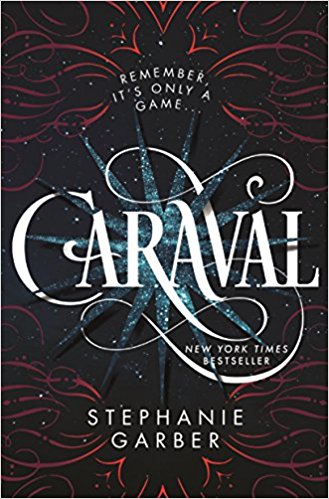
For all her life, all Scarlett has wanted is to visit Caraval, the magical traveling show where audiences get to participate in the show. When her domineering father arranges a marriage for her, she is sure that she and her younger sister, Tella, will never get to see the fantastical performance. Only days before her wedding to a groom she has never met, she receives an invitation to be the special guest of the shows powerful leader, a man known only as Legend.
With the help of an unlikely ally, Scarlett and Tella manage to escape their island home and find their way to the secret location where Caraval is located, only to be separated upon arrival. Now Scarlett has to join the game, and she only has five nights to solve the clues of Caraval and find her sister. While dodging deadly obstacles, she must struggle to remember the most important rules of Caraval: things are rarely as they seem, and don’t get swept too far away from reality. Afterall, Caraval is merely a game, right?
I feel as if I’ve been consuming a lot of “circusy” media lately. I’ve been totally obsessed with the new movie, The Greatest Showman, and this is the second sort of circus book that I’ve read in the last month or so. But this book was really different than Daughter of the Burning City, though both had the same sort of gothic-y carnival vibe. Scarlett continues the trend that I’ve been seeing in YA recently of being a fairly flawed, naive protagonist, though not so much as some of the others that I’ve read. I like this aspect of her personality, though she is certainly not the most original of heroines I’ve ever read, and that is almost entirely why this book didn’t get the best score that it could have. Scarlett starts the book afraid of everything, but through the story learns to loosen her hold on the reigns of her life and take risks. Grow though she may through the book, it is clear from the beginning that she will endure anything to save her little sister, and that is something that seems fairly stereotypical about her character.
The world of Caraval, however, is unique and vivid, it’s characters and atmosphere larger than life. Though the interesting part is that what may seem like magic in the dark, may be far less mysterious when the sun comes up, and that’s all I’ll say. But this is definitely a world where fantasy reigns, and I like that in the books that I read.
One of my favorite parts of this book was that I really didn’t predict the ending at all. Every time I thought I had it pegged, it would tease me into thinking that I was right, but then twist everything that I thought on its head. And everytime that happened, I felt as if I was really having the experience that Scarlett had, as she attempted to figure out the game that was Caraval.
This book is brain candy of the highest degree, and I thoroughly enjoyed reading it. I think the world that Garber weaves is wonderfully rich and entertaining, but with the number of books that I’ve read recently that I feel have really impacted me, this book just didn’t make me feel changed in any way, and that I think is the only real drawback that I can report. If you like a dark, unpredictable fantasy, this book is totally for you. Especially if you’re in a circus-y mood, like I am.
If you liked Caraval, try: Daughter of the Burning City by Amanda Foody
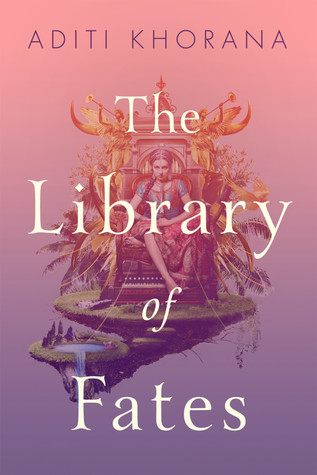
Amrita, princess of Shalingar, has lived a charmed life. She lives in a beautiful country where nobody lives in poverty, the people live in peace, and men and women have equal rights to pursue what they want to in their lives. Amrita has a loving father, a nursemaid who has always been like a mother to her, and her childhood best friend, Arjun, who might in fact be more than just her friend. But when the powerful Emperor Sikander of Macedon becomes interested in Shalingar, Amrita is willing to do the unthinkable and become this horrible tyrant’s wife to save her kingdom.
But everything changes when Amrita meets Thala, a young oracle who is a “gift” for Amrita. When the tides quickly turn from political alliance to hostile takeover, Amrita and her new friend must escape the clutches of Sikander to go on a journey that neither of them wants with a destination that will surprise them both.
Okay, I just wanted to start out by saying that the flap of this book focused a lot of the relationship between Thala and Amrita, but also talked about finding new love, and I was super sure that these two were going to end up falling in love. Sorry, spoiler, that doesn’t happen, and I think the book would have earned five stars if they had. Sorry, I just think it would have been pretty cool to see a same sex couple in this fantasy story based on Eastern mythology. But I digress, and will talk about things that actually happened in this book.
First off, I loved how this book was fantasy, but really drew a lot from Eastern tradition and mythology, which I don’t know very much about, but I recognized that Sikander and Macedon were loosely based off of Alexander the Great, which was pretty interesting. I thought that the world that Khorana created was rich and vibrant with colorful descriptions of a lush palace and the contrast of harsh deserts and dark caves.
Another thing that I really enjoyed was how unpredictable this book was. I thought I had some ideas about how the story was going to end, but it really ended up being different than I thought, and perhaps that’s because I really can’t say I’ve read any other books quite like this one before.
Amrita is a great main character, she seemed pretty realistic to me. She grew up privileged, but still smart and capable. She is at the beginning skeptical of the world around her, but also very afraid of being alone and doing the wrong thing. She was a very easy heroine to like and to cheer for. Thala was also a wonderful character, an oracle who has immense power, but has been kept as a slave since she was a child and force-fed a drug to make her premonitions more potent. She is a believer in the magic and spirituality of the world, but she is harsher and fiercer than Amrita, who is much softer in comparison. Two vibrant, unique female main characters that face a number of challenges together, and are the true heroine’s of the story.
Now, I’m going to talk about why I didn’t give this book full marks. While, like I said earlier, I did really like this books unpredictability, I’m not sure I’m fully behind the story’s ending. It’s not a sad ending, but it’s not necessarily a happy one either, and I think that out of all the possible endings the author could have picked, this was the weirdest one, though part of me thinks it’s nice. I’m of two minds about it.
The other thing was that I think this book was pretty rushed story-wise. These two main characters go on a very intense journey that takes place over really only a few days, and I feel like the character development and the plot seemed a little hurried, and I’m not sure that I quite believed that these two characters could have such a transformation over such a short period of time. If the book had been longer, I think I would have believed the developement a little bit more. Though it was a nice, short weekend read, which was nice because I did not have time to read anything longer this week.
Overall, I liked the book and would recommend it for anyone who is a lover of fantasy and mythology who is looking for something a little bit different.
If you liked The Library of Fates, try: The Dovekeepers by Alice Hoffman
Malcolm Polstead is a smart, curious boy of elevan. His life has always been interesting, but ordinary and happy. He lives with his parents, who own an inn/pub on the river in Oxford, he has his own little canoe, La Belle Sauvage, which he rows across the river to visit the nuns in the priory, who are his closest companions. His days are spent in school, and his nights are spent helping his parents out in the pub, where he’s always privy to the most important news and gossip in town. And it is in this way that he first hears about a very important infant who is staying with his very own nuns at the Godstow priory: the baby Lyra, who is already the subject of much mystery and intrigue. And before long, Malcolm finds himself inexorably wrapped in the life of the baby Lyra, and the forces that conspire to either protect her or harm her.
As soon as I heard that Philip Pullman had another book coming out from the world of His Dark Materials, I knew I had to have it. The Golden Compass was one of my very favorite books growing up. Long after I had read all three books, but before the movie came out, I remember my mom telling me that she read something about the author being a hard-core athiest, and that there was some really blasphemous God-killing scene in The Amber Spyglass. This was right around the time there was a big stir about it, and I think to this day that His Dark Materials is banned in just about every private school in America, which I always thought was odd, because at the time I read The Amber Spyglass, I read right through the scene where “God” dies without batting an eye. I was only twelve or thirteen at the time, and I feel as if a lot of that book went over my head. It was only after my mom mentioned it that I remembered going oohhhhhh, I see how people might be uncomfortable about that. However much of a radical that Philip Pullman might be, I don’t think that his books deserve to be banned anywhere, because they are quite obviously words of fiction, and even as a very impressionable, though not particularly religious, preteen, I never felt as if there was any sort of “agenda” drilled into my head or anything. They were just delightfully creative fantasy books with talking animals and witches, where this entity called “The Church” were the bad guys, though my twelve-year-old brain did not even associate “The Church” of His Dark Materials with the churches that I understood in the real world.
Anyway, enough about that. The Book of Dust was a wonderful dive back into the world of Lyra’s Oxford. Even though I haven’t read any of the books since I was in middle school, it didn’t take me long to really become fully immersed in the world that Philip Pullman creates once again, with the gyptians and the daemons and Lord Asriel and Ms. Coulter. Though the nice thing is, if you’ve never read His Dark Materials, you can still pick up and enjoy The Book of Dust, without feeling like you’re missing anything, though surely it’ll make you want to go and pick up The Golden Compass. I know my next reread, for sure.
The main character of this book, Malcolm, has the same wonderfully pure, intelligent quality that Lyra has, though this book puts Malcolm, only elevan, though very adult trials, and is definitely a test of his goodness and purity. Something that I believe that Pullman does very well is writing children that are still fairly believable as children, but makes them very intelligent and strong in a way that inspired me as a youth not much older than Lyra or Malcolm. These books, I think, are very accessable to any reader above the age of ten, though I wouldn’t call any of them “easy” by any means. Philip Pullman would never talk down to any of his readers, just because they were children, and all of the children in Pullman’s books are written with the respect they deserve, which is always something that I’ve loved.
Though I did feel as if both Lyra and Malcolm had some similar core qualities as characters, Malcolm didn’t feel redundant, or anything like that. He’s a unique character, and his story is very unique as well. This book is more complex than The Golden Compass, which I feel is the most accessible of His Dark Materials, and I feel as if this book is a more advanced first book in the trilogy than The Golden Compass, though I honestly couldn’t say that one is better than the other, just different.
Though you won’t catch me saying much of anything negative about any of Philip Pullman’s books, which I’ve loved since I was a child, I will say this: he is one of the more pretentious writers I’ve ever met. While I think that it’s excellent that he writes books that are accessible to a young audience while not talking down to them, he does write with this haughty air that if I didn’t love the stories and the characters so much would bother me, because it’s the same vibe that most writers who consider their books “literature” have. I’m not sure if I’ve ever ranted about how much I’m annoyed by writers who take themselves too seriously, but I am so very irked by them. Writing fiction, to me, is art done for entertainment’s sake, and some authors, I feel, try to hard to impress some heavy symbolism on me, the reader, or write books with the intention that book clubs will gather and talk about the heavy “themes”. The best books, for me, are ones that use symbolism and address heavy themes without making me think “wow, the author tried really hard to leave me with THAT impression”. Philip Pullman has, always, danced on that line for me. He’s almost too pretentious, but not quite. Which is why I considered giving this book 4.5 stars, but I’d be lying, because I loved every page of this book.
If you’re a lover of Philip Pullman, this book won’t disapoint. If you’re a fan of deeply immersive, intricate fiction, this is definitely the book for you. But if you’re looking for something that’s light and easy to read, I’d recommend something a little bit different.
If you liked The Book of Dust, try: The Golden Compass by Philip Pullman





 Sarah's Shelf